Network of
Interest
Two archives, one network. The first is my set of raw investigative notes on the former intelligence officers, Cicada organizers and YouTube channels that carried them. The second is the evidence I’ve kept since 2017: email headers, court filings, Reddit trails and video.
They are not the same kind of material, and this file never pretends they are. Every entry is stamped with what it actually rests on. And the file doesn’t stop where the notes do: the same methods run through Anonymous, Occupy and Standing Rock as through the Trump transition (chapter 12 and chapter 24), and one operator is documented on both sides.
- Cicada 3301 and WikiLeaks were brands with no one able to police them: an anonymous puzzle with no proven author, and a publisher whose founder was cut off from the outside world.
- From 2016 a small, documented set of people put those names on their own material: a blog that "connected" Cicada to WikiLeaks while admitting it had never heard of Cicada, a fake WikiLeaks shop, and a contract licensing Cicada 3301 as someone's "property" weeks before Q.
- The same people supplied the rest of what Q would run on: borrowed intelligence credentials, a New Age vocabulary of disclosure and awakening, and money that left a paper trail.
- The method is not partisan. It shows up around Occupy, Anonymous and Standing Rock as well as the Trump transition, and one operator is documented on both sides.
- So the finding is a method, not a conspiracy: borrowed authority, a myth and a scoreboard, run on whatever real cause is nearby. Every claim below is stamped with what it rests on, so you can check that for yourself.
Five seats at one table
Former intelligence officers. They supply authority.
Cicada-adjacent organizers. They convene.
YouTube and podcast distribution.
In it — role not yet established.
Payment paths that tie the rest together.
A puzzle, a stranger called Q, and the night I found one inside the other
I'd been offline for about a week. That night I put on one of my favourite Cicada shows, and it wasn't about Cicada. It was about something called Q. I went back to my Cicada servers and found Q channels already set up on nearly every one of them.
I'm Arturo, Lestat online. Two weeks earlier, on October 19, a man named Thomas Schoenberger had invited me into a group that called itself Cicada 3301. I made its art. Within five days his requests weren't about art anymore.
To see why that night matters, you need two names. The rest of the cast can wait until the story needs them.
In 2012 an anonymous puzzle appeared online. It recruited codebreakers with hidden messages, coded images and clues taped up in a dozen cities. It ran three years and vanished. Nobody has ever established who made it.
That last part is the whole problem. A name nobody owns is a name anybody can wear, and nobody can step forward to say no.
On October 28, 2017, five days before my show, an anonymous account called Q started posting on 4chan. Its followers called the posts "drops" and quoted them like Bible verses. The movement that grew around them is called QAnon.
The shape of the story was simple: an anonymous federal insider, an elite pedophile ring, arrests coming any day now.
That exact story, insider, ring, indictments, was published on November 3, 2016, under a Cicada 3301 banner. A year before the first Q post. The page is in chapter 09.
So the question here isn't the one everybody asks. It's who built the costume Q walked out in, and how a puzzle nobody owned ended up wearing it.
I don't know who typed the Q posts, and this file never says it does. Nobody has established who made Cicada, and I won't pretend to. What I can show you is the order things happened in, and the paper they left behind.
In August 2018 I looked up who owned a WikiLeaks storefront the group was pushing, found a Panama-registered counterfeit, and walked out. I've kept the receipts ever since.
Walking out had a price. I'm a named target of people in this file, and the pressure came by email, before and after I refused to testify (chapter 22, every thread with its ID). That's exactly why my account is marked as my account. You'll also meet a man who says he started it (chapter 11). His account gets the same stamps as mine.
Every entry carries one of three stamps: Documented means there's a document in hand, Claimed means someone said it and we can prove they said it, Unverified means it's a lead nobody has confirmed. You don't have to believe me. You only have to look at the stamp.
Next: those first five days, in his own writing. Chapter 09, how Cicada was turned into Q →
Twenty-eight chapters, two archives, one method
- Act I · How the stage was built, 2001 – 2017 · read after ch.09 if you’re new
- 01The castBrains, facilitators, mouthpieces, the involved, and four money paths.
- ↳Who connects to whomThe interactive map: every line restates a link already in the file, at the same tier.
- ↳Twenty-five years, one dot per entryThe interactive timeline: every dated entry, coloured by its tier.
- 02Two men, two careersMusic for Infants, Pieczenik's manifesto, Amadeus, the Cosmos Club wedding.
- 03Cicada meets the Pentagon storyCicada appears, Flynn leaves DIA, GreenZone, the film-rights play.
- 04A deposition and a fake BBCThe 2015 deposition, the counterfeit BBC page, "his own Cicada."
- 05The intelligence veteransVIPS, Binney, Steele, Victurus Libertas and the July 2016 launch.
- 06Follow the moneyFlynn Intel Group equity, INOVO BV → SGR LLC, Wikistrat.
- 07Three weeks before the voteThe last three weeks of 2016 and who carried the arrest story.
- 08Upstairs, after the winKislyak, Nader, Kian — and "Jim Blake and I were Larping."
- Act II · The game, 2017 – 2020
- 09How Cicada was turned into QPrimary emails, Drpbox, HAZMAT, wikileaks.shop, PDAnon.
- 09bKeeping Cicada away from QMy witness account from inside the group, 2018 – 2019.
- 10The New Age recruiting pipelineIONS, Markley's curve, Hubbard, the Gaia pipeline.
- 11The man who says he started itThe competing origin account, filed at the tier it earns.
- 12Neal Rauhauser's playbookThe method on the other side of the line: Occupy, Standing Rock, the honor trap.
- 13Inside the research roomAxis of QAnon, the DADA proposal, six NDAs.
- 14How a rumor becomes the newsChat room → court record → newspaper, and both money columns.
- 15One scared recruitOne recruit, one script, one break.
- 16Many masks, few peopleZ, Kryptos Journal, the encoding signature.
- 17Eye the SpySeven handles tied to "E", dated from Wayback captures: growth, renames, suspensions.
- 18How I keep myself honestHow the file is built and what it guards against.
- Act III · The aftermath
- 19Eight years of changing storiesThree stories in eight years, the 2018 removal emails, admissions on tape.
- 20675 videos in nine months675 videos in nine months, counted — and the lawsuit described out loud.
- 21Who took the creditHow research moves from a source to someone else's byline.
- 22The pressureThreats and pressure in writing, 2018–2020 and July–August 2026, each with a thread ID.
- Interlude · How to read it · interpretation, and it says so
- 23The frameBannon, Traditionalism, hyperstition, and where that network meets this cast.
- 23bThe lensEllul, Debord, Baudrillard, Stiegler, Lacan and AI psychosis: why the audience said yes.
- Act IV · Where it led
- 24Standing RockWho moved between Occupy, Standing Rock and the fight over Q, and what each link rests on.
- 25The machineHackers, informants, platforms and counter-disinformation groups: what has a public source, and what was left out.
- 26PaxtonThe one claimed Shadowbox contact with an elected office, and the same method, bigger, around Paxton in 2023.
- 27Signed QSalvator Mundi as the "key to Liber Primus," a BitChute channel called Cicada3301 signing Q, Thomas writing that Clapier backdated a video, the Cobra rose scene behind the vocabulary, and the VictoryOfTheLight account’s own posts, including its claim that MEgaAnon was “a source of ours.”
- 27bThe dateQ's "storm," and where people from this file stood in the weeks before, the night before and on January 6. A record of where they stood, not a charge.
- 28To be continuedThe five sentences, closed: what is documented, what has not happened as of Oct 30, 2026, and what you can do.
- Epilogue
- ↳Music & artTwenty music and art pieces, as a fullscreen slideshow.
- ↳Essay: Aesthetics of the UnseenWhy this file looks the way it does: building the mystery on one screen and taking it apart on the other.
- ↳What I've said sinceSix articles and four threads, copied here so they last.
- ↳The receiptsThe files behind the file, including six new rev. 4 sources.
- Appendix
- ↳The Q IndexSearchable index of 190 people in the QAnon story, from Insider's 2020 database, linked to the chapters.
- ↳Sakura: lyrics guideWhat every song is saying, with a player so you can listen while you read.
- ↳The methodIf Cicada is the game, this site is the Nintendo Power guide.
Rev. 5. New here? Start at the door, then go straight to chapter 09, where the game begins. Act I is the backstory, how the stage was built, and it makes more sense once you’ve met the cast. Act II is the game, Act III what came after I said no, an interlude on how to read it, and Act IV where it led, up to January 6 and where the record stands now. Every entry carries one of the same three stamps.
It was always a game. That's not a metaphor.
A conversation about this file, generated by Google NotebookLM from the full page. Not a replacement for the record below — a companion to it.
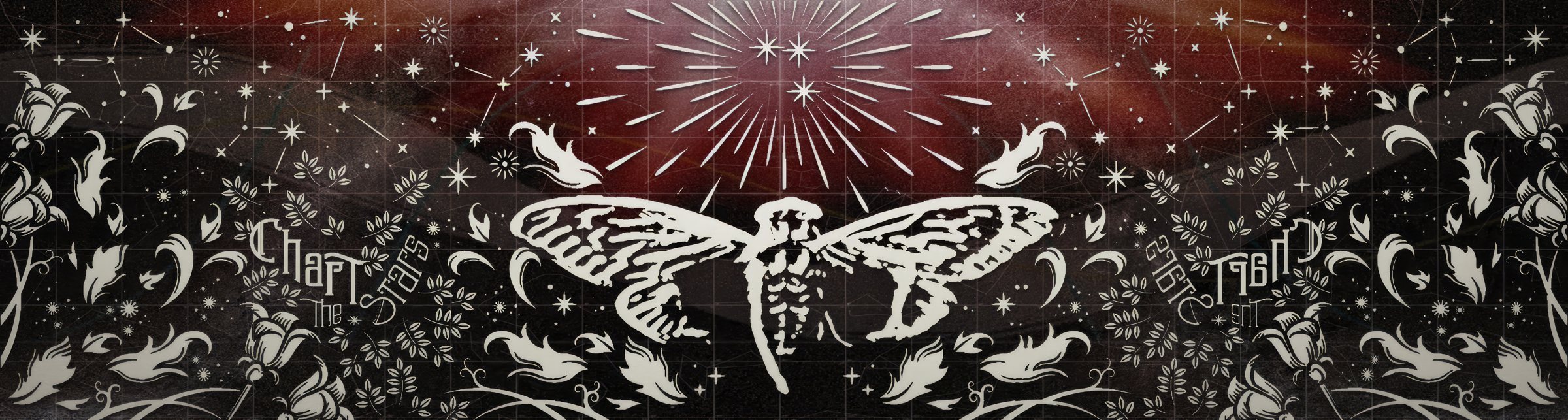
In 2012 an anonymous puzzle called Cicada 3301 appeared online, recruiting codebreakers through cryptography, steganography and dead drops in a dozen cities. Nobody has ever established who made it. It ran three years and vanished, and it left behind something more useful to the wrong people than any recruit: a brand with no owner and no way to say no.
This file is about what happens next — when the mechanics of a game get pointed at real movements and real people. Not as an analogy. As a working method, with players, scoring, escalation and a designer.
In 2021, the man behind the Thrive documentary described his audience as gamers and what they were doing as the real game.
He was not being critical. He was describing the product. You will hear him say it in chapter 09, next to the review that called it in 2013.
The method, in three moves
A cause with genuine moral weight and no accountable center. An anonymous puzzle. An occupation. A water-protection camp. An imprisoned publisher. A leaderless movement cannot expel you, and cannot correct the record about you.
Borrowed authority from retired intelligence officers, and a cosmology bought off the shelf from a New Age industry with a fifty-year funded history: chosen, disclosure, the tipping point, a date when everything breaks. Old messages get re-read as prophecy once events arrive.
Recruit researchers into work they already believe in. Calibrate the wins and the jabs. There is a doctrine for this, written down in 2016, and its stated outputs are despair or overreach. Both remove the player from the board.
QAnon is in this file, and it matters — but as a product of the method, not the subject of it. The same operators and the same playbook show up around Occupy, Anonymous, Standing Rock and the campaign to free Julian Assange, years before and years after. That is the actual finding: this is not a political network. It is a methodological one, and it has worked the left and the right with the same hands.
- That Julian Assange or WikiLeaks had anything to do with Q. The file documents the opposite: WikiLeaks denying any tie to the Discord using its name, and a fake WikiLeaks shop. His name was the bait.
- That the people who made Cicada 3301 were involved. They have never been identified. What is documented is other people claiming the puzzle, and licensing it, after the fact. Cicada's own April 2017 message warned: "Beware false paths."
- That it knows who typed the Q posts. It documents the format Q inherited and the people who built it. It names no author of the drops.
- That the movements were fake. The people at Occupy and Standing Rock, and the people campaigning for Assange, were sincere. The finding is about who attached themselves to them.
- That you need to take the author's side. Chapters 12, 13, 19, 21 and 22 involve the author's own disputes and are marked Witness account. Skip them and the argument above still stands on chapters 01–11 and 14–16.
I didn't arrive as a critic. I arrived starstruck. There was a composer with Hollywood credits involved, and that made the whole thing feel real. I made the art. I argued in comment sections defending the group's reputation. I asked, early and more than once, whether Q was connected, and the answers were evasive enough to keep me working and vague enough to keep me hoping.
Then Schoenberger came to my house. After that visit I told two people in the network that he was a con artist. Within weeks it had been relayed back to him. What followed was the swarm.
What ended it wasn't winning an argument. It was realizing I'd been defending a symbol that was never mine. I was never Cicada. Once I stopped needing to be, the usual attack, you weren't even really in it, stopped landing, because it was true and it no longer cost me anything.
So this isn't a claim to insider status. It's a record kept by someone who gave the status up and kept the receipts.
The Hero Making Machine. The gamification thesis in video — how the method manufactures protagonists who believe they are acting freely while following a script · Watch on YouTube ↗
It was 3 a.m. I was alone in my room looking at my computer monitor, which displayed an image of an insect, a cicada, with a message that said: "Hello. Epiphany is upon you. Your pilgrimage has begun. Enlightenment awaits. Good luck. 3301."
I grew up in Ensenada, raised by my grandparents, in a house where money was scarce and imagination wasn't. At a Christian elementary school they made me copy Bible verses as punishment for drawing monsters in the margins of my notebooks. It never worked.
At thirteen I taught myself to program from the code printed in Nintendo magazines. At fifteen I won an art contest with a mural of Quetzalcoatl, with anime in its bones. It's still standing in Ensenada. At eighteen I was a graphic artist at a newspaper, and at twenty a game studio hired me as a developer while I put myself through an industrial engineering degree.
At twenty-three two men stabbed me in the neck and back during a robbery, and the blade broke off near my spine. At twenty-five I launched my own MMORPG server under the name Lestat, and it grew to a million players a week. At twenty-six I walked away from everything I'd built and kept my cat. I tried medical school after that, and left it when my grandmother, the woman who raised me, died.
An ARG called La Sociedad del Vuitre Volador taught me motion graphics, and it's where I first crossed paths with Defango. It ended on 7/7/17 with a staged, livestreamed kidnapping real enough that someone called the police. Around the same time, I found Cicada.
Hundreds of Cicada 3301 YouTube videos, articles, blog posts and music, together with the logo, just made the group and its puzzles more compelling. I found the chat groups where solvers shared what they knew, and it didn't take long for me to be fully immersed. I contributed to solving where I could, but I gravitated to making Cicada-themed graphics, because I easily grasped the group's aesthetic of mystery.
Apparently core Cicada members were watching, and they were impressed. In late 2017 I was invited to become a full member. I kept making graphics for the group pro bono, for the friendship and the inspiration I had found in the puzzles. In April 2018 a new Cicada 3301 puzzle was released, and its promotional campaign featured my artwork.
Back then I had no idea what kind of trouble I had gotten myself into. In the summer of 2018 I found out first-hand that the group was being led by a con man with stalking charges in his past and a habit of internet money-making schemes that hoodwinked YouTube influencers and other smart people. It wasn't only me being used. And many of the group's members had started promoting the ideology that since 2017 has been called QAnon.
From that moment in 2018 I made it my priority to expose the organization and debunk the growing QAnon conspiracy. I taught myself open-source research and livestreaming, and I kept making art, because art was how I could say what I had learned.
Through that experience I realized that we, as a global society, are engaged in a war not just over information, but over the meaning of information. Narratives are about the meanings we assign, not about truths.
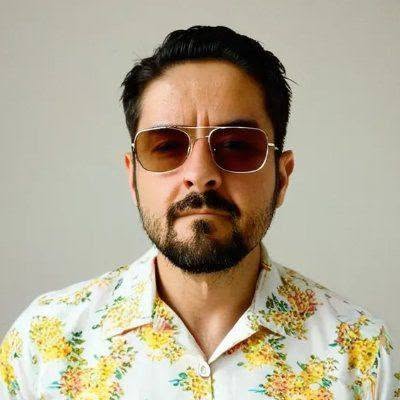
I'm Arturo Tafoya, Lestat online. I do cybersecurity, pen-testing and OSINT from Ensenada, Baja California, under the name Enzenada Cloud. I spent eight years shipping games at Gameloft before any of this, which is why "it was always a game" isn't a figure of speech for me.
I was graphics lead for a Cicada 3301 collective and designed the "Lunar Horns" identity that later showed up in an HBO documentary. The art has never been separate from the investigation. Some of my videos were made as evidence, and some were made as answers. I try to make work that acts like a blank slate: a rose, a dark triangle, an eye, an ouroboros, symbols people fill with their own meaning, so each viewer lives their own experience of it. The 2017–2018 Cicada anthology ↗
Acknowledged in the peer-reviewed paper on QAnon's origins (arXiv:2207.05118). Interviewed in two parts by CICAP's Query magazine (2022). Appeared in VICE and HBO documentaries. TEDx speaker.
Because I was a player. From October 2017 I built puzzle artwork alongside Thomas Schoenberger, believing I was working on an alternate reality game. In August 2018 I ran a WHOIS lookup on a WikiLeaks storefront, found a Panama-registered counterfeit carrying the campaign's own hashtag, and walked out.
Everything since has been the cost of that: years of coordinated harassment, my research taken and republished under other names, and a lawsuit from the man at the center of it, in which I'm not a defendant. I'm a named target of the network I'm documenting. I'm telling you that up front because it's the reason this archive exists at all.
This subject is a swamp. Most of what is written about it is written by people inside it, settling scores. So this file does the one thing that makes it checkable: every entry is stamped with what it rests on — a document in hand, somebody's claim, or an open lead. There is a filter at the top of the next section. Switch off the claims and the leads and read only what survives. That is the honest version, and it is most of the file.
If you came in through the door, keep going straight to chapter 09. That’s where the game starts and where you meet the cast. Chapters 01–08 translate 12 pages of raw investigative notes running 2001 to early 2017: how the stage was built. They read better once you know who is standing on it. From chapter 09 on, most entries rest on primary material: emails with intact headers, court filings, forensic memos, dated screenshots. Chapters 23 and 23b are interpretation and say so. If you read one chapter, read 09. If you want the part nobody else is writing, read 12 and 24.
The purple cards marked From my book are my own story, from the book I'm writing, The Game. Cards marked In my own words · published are things I said on the record before this file existed, mostly to Francesco Grassi for CICAP's Query magazine in 2022, with links. Both kinds are testimony, placed next to the evidence rather than mixed into it.
One last thing, since it's the standard I hold this to: do the right thing when nobody is watching. I got that from my grandfather, and it's the only reason a nine-year archive exists at all. Most of it was put together during years when nobody was watching, and some of the people in it were counting on that.
Network of Interest
Oct 13, 2026 · 8:40 · YouTube ↗
The whole file in eight minutes: borrowed authority, myth, scoreboard. It also says what the dossier does not claim.
1995 → 2026
Notes end at 2017; corpus runs to present
350
Filterable by evidence tier
285
Artifact or published record behind it
26-000013-MZ
Michigan Court of Claims, consolidated
Because the author is a named target in this material, his own path through it is laid out here rather than left for others to narrate. Personal matters that have no bearing on the evidence are deliberately left out.
- Oct 19, 2017Formal invitation into Schoenberger's Cicada-branded group after commenting on his Sophia Musik channel. Tasked immediately with visual assets — the "Follow the White Rabbit" and "Chart the Stars" artwork among them. A 2019 interview on the Samizdat site describes the author as an inner-circle member "(2016-8)" and "chief of graphics." That dating is the interviewer's, and it is wrong: his first contact was this October 2017 comment, and the email thread that starts that day is in chapter 09.
- May 2018Schoenberger stays at the family home in Ensenada. The visit ends with him put in a car. Within days, emails to the wider group demand that Defango's videos be reported. A group member replies in the author's defense: "Arturo seemed like a person with real integrity."
- May 7 – Jun 13, 2018Manuel Chavez III (Defango) is removed from the group in writing — "we do not associate with him," a proposal to cast him as Judas in the next puzzle, and payments rerouted away from him. The thread is forwarded to him in November (chapter 19).
- Jul 25, 2018"Why are you promoting QAnon?" — asked of Lisa Clapier inside the Unity4J Discord (chapter 09).
- Aug 2018WHOIS on wikileaks.shop. The defection point (chapter 09).
- Aug – Oct 2020Primary files, folders and logs supplied to Jim Stewartson, who writes publicly that none of the exposure would have been possible without Lestat. Late August: helps extract "Zack" from Schoenberger's control (chapter 15).
- Sep 2020Dilley writes to me first, as a fan of the shows (chapter 21).
- Sep 2020Stewartson brokers an interview with Dale Beran for The Atlantic and coaches it: "don't give him your vault" (chapter 21).
- 2021Dilley shares an early draft of the QAnon paper. Oct 2021: Cullen Hoback films in Ensenada. Nov 2021: the "Axis of QAnon" Wire group (chapter 13).
- Jan 31, 2022The DADA proposal names the author as the eyewitness whose archive the project is built on. No budget line for him (chapter 13).
- Oct 2021 – Jul 2022Paper provisionally accepted by Frontiers in Communication (Oct 2021) but never published there; posted to arXiv (2207.05118) as a preprint in Jul 2022; the author is thanked in the acknowledgments (details).
- Dec 2023Infiltration of Schoenberger's circle declared in advance to Dilley and five witnesses (chapter 12).
- Apr 2024Chavez messages Dilley privately that the author was "sent in to play Casanova and poison the well" — after the author had warned her not to engage him (chapter 19).
- Sep 1, 2024His desktop computer is accessed in Ensenada; the other side later dates the "discovery" to that day in public (chapter 13).
- Feb – Sep 2025Welna disavows the paper; Schoenberger sues; the Detroit News prints his attorney's account of who made Cicada 3301 (chapter 14).
- Jul 2026Schoenberger, in email: "Jim Blake and I were Larping" (chapter 08).
Three stamps, and what earns each one
The failure mode of every network dossier is that a rumor and a court exhibit end up looking identical on the page. So they don't here. Toggle a tier off and watch how much of the story survives — that number is the real finding.
The sourcing rules behind the stamps, and why they exist, are in chapter 18.
A primary artifact is in hand and reviewable: a source .eml with passing SPF/DKIM/DMARC, a stamped court filing, an archived post with an absolute timestamp and status ID, a video file. Transcriptions are reading copies — the artifact is the evidence.
Someone asserted it, and we can prove they asserted it. That is a real fact about the speaker and a weak one about the world. Most of what Thomas Schoenberger has ever said lives here.
It is in the notes, it is worth chasing, and nothing has confirmed it yet. Unverified is not false. Collapsing those two is how good researchers get discredited by their own footnotes.